
The U.S.-Israel war against Iran has now passed its one-month mark, and the world is watching one of the most consequential military conflicts in modern history unfold in real-time. What began on February 28, 2026, with a surprise joint airstrike has spiraled into a global economic emergency, a humanitarian disaster, and a diplomatic standoff with no clear exit in sight.
President Donald Trump claims the mission is already a success — that "regime change" has effectively been achieved because Iran's top leadership has been decimated. Iran's remnant government disagrees sharply, calling American proposals "excessive, unrealistic, and unreasonable." Meanwhile, the Strait of Hormuz — the narrow waterway through which roughly 20% of the world's oil flows — remains choked, sending Brent crude past $116 per barrel and triggering a global energy shock that experts at the International Energy Agency are calling the biggest oil disruption in history.
This post breaks down everything you need to know: how the war started, who has been killed, what the Hormuz closure means for the global economy, where peace negotiations stand, and what the next chapter of this conflict might look like.
For ongoing coverage and analysis, visit the HitTop News Desk.
1. How the War Started — The Background Nobody Expected
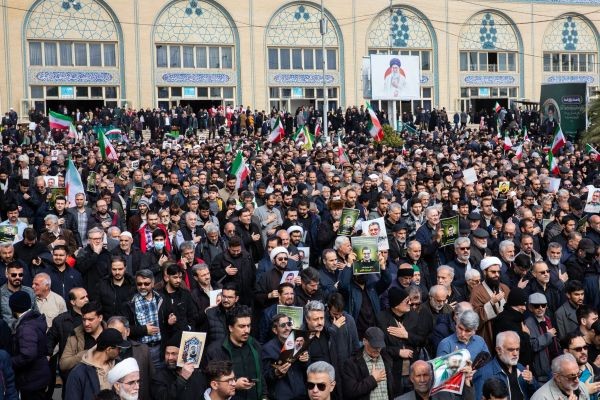
In January 2026, Iran's security forces killed thousands of protesters during a crackdown on the largest anti-government demonstrations the country had seen since the 1979 Islamic Revolution. President Trump responded with increasingly aggressive rhetoric — threatening a "locked and loaded" military intervention and pledging that "help is on the way" for Iranian protesters.
In mid-February, just as a new round of indirect nuclear negotiations was beginning between Washington and Tehran, the mood briefly shifted toward diplomacy. Iranian Foreign Minister Abbas Araghchi publicly stated that a "historic" agreement was "within reach."
But it never came. On February 28, 2026 — while those nuclear talks were still technically ongoing — the United States and Israel launched a coordinated surprise attack on Iran. The strikes targeted nuclear facilities, military command centers, radar systems, and, critically, Iran's senior leadership.
According to Wikipedia's continuously updated article on the conflict, the Trump administration has offered shifting and sometimes contradictory justifications for launching the war: pre-empting an Iranian attack on U.S. assets, destroying Iran's missile capabilities, preventing a nuclear weapon, and achieving outright regime change.
For our full timeline of the conflict, read: HitTop's Iran War Timeline.
2. Who Has Been Killed — Iran's Leadership Devastated
The strikes did enormous damage to Iran's top tier of command. The following senior Iranian officials have been killed since February 28:
Supreme Leader Ayatollah Ali Khamenei
Ali Larijani — Head of the Supreme National Security Council
Aziz Nasirzadeh — Minister of Defense
Mohammad Pakpour — IRGC Ground Forces Commander
Gholamreza Soleimani — Commander of the Basij Force
Ali Shamkhani — Secretary of the Defense Council
Alireza Tangsiri — IRGC Navy Commander (killed in a later Israeli airstrike)
Despite these losses, Iran's government has not collapsed. President Masoud Pezeshkian, the Chief Justice, and other senior officials remain alive and functional. Khamenei has been succeeded by his son, Mojtaba Khamenei — a move that Trump publicly rejected and dismissed.
According to CNN's analysis, the Iranian regime had deliberately decentralized power long before this conflict began — precisely to ensure it could survive high-profile assassinations. The Islamic Revolutionary Guard Corps (IRGC) continues to lead the war effort, and there have been no major military defections since the fighting began.
Full leadership analysis at: HitTop's Iran Leadership Breakdown.
3. Trump's "Regime Change" Claim — Reality or Spin?
Speaking to reporters aboard Air Force One, Trump declared: "We've had regime change, if you look already, because the one regime was decimated, destroyed, they're all dead." He later stated the U.S. is having "serious discussions" with "a new, and more reasonable, regime" in Tehran.
Iran's government flatly denied this, stating no direct negotiations with the United States are taking place. Independent experts also dispute Trump's framing. Al Jazeera reported that despite the targeted killings, there is no public evidence of a new government in power. The system that the Islamic Republic built over 45 years was designed to outlast the deaths of its leaders.
4. The Hormuz Crisis — The World's Biggest Oil Shock
Before the war began, approximately 130 ships passed through the Strait of Hormuz daily. That number has now fallen to six or fewer. Iran's effective closure of the strait has produced the biggest oil supply shock in recorded history, removing up to 20 million barrels per day from global markets.
The consequences have been severe:
Brent crude hit $116.12 per barrel, up more than 50% since the war began (CNBC).
The OECD raised its inflation forecast for G20 economies to 4% and cut global growth to 2.9%.
The Philippines declared a national energy emergency.
Spain closed its airspace to U.S. military planes involved in Iran operations.
Trump has issued a deadline: Iran must reopen the Strait of Hormuz by April 6, 2026, or the U.S. will destroy Iran's power plants, oil facilities, and desalination plants.
Hormuz crisis deep dive: HitTop's Strait of Hormuz Tracker.
5. Peace Talks — Pakistan in the Middle
The closest thing to a diplomatic process right now runs through Pakistan. Pakistan's Foreign Minister Ishaq Dar confirmed that "U.S.-Iran indirect talks are taking place through messages being relayed by Pakistan," with Turkey and Egypt also offering support.
NPR reported that Iran rejected a U.S. "15-point action list" and responded with five conditions of its own, including war reparations and recognition of Iranian sovereignty over the Strait of Hormuz. Notably, neither side has mentioned Israel by name in the peace process, complicating any eventual agreement.
For full coverage of the negotiations: HitTop's Peace Talks Updates
6. Escalation on Multiple Fronts
The war is no longer contained to Iran. Multiple regional conflicts have opened up:
Israel vs. Hezbollah: Fighting in southern Lebanon has escalated, with over 1,200 reported killed in the past month.
Houthi Strikes: The Yemen-based rebels launched their first strikes on Israel since the war began.
Kuwait and Bahrain: Strikes have damaged vital infrastructure in both Gulf states.
Russia's Presence: Around 300 Russian specialists remain at Iran's Bushehr nuclear power plant, though evacuations are underway.
7. U.S. Public Opinion — Americans Turning Against the War
Domestically, the war is becoming a political liability. Polling data shows:
59% of Americans believe using military force against Iran was the wrong decision.
61% disapprove of Trump's handling of the war.
54% of voters are opposed to the military operation overall.
Allies are also restless. Australian Prime Minister Anthony Albanese publicly stated that Washington did not consult its allies before launching the attack.
8. What Comes Next — Three Possible Paths
Based on the latest reporting from The New York Times and other major outlets, three scenarios are on the table:
Path 1 — Diplomatic Breakthrough: Pakistan-mediated talks produce a framework agreement before April 6. Iran reopens Hormuz in exchange for a ceasefire and sanctions relief.
Path 2 — Escalation: Talks collapse, Trump strikes Iran's power plants or seizes Kharg Island, Iran responds with broader missile attacks, oil spikes past $130, and the U.S. deploys ground forces.
Path 3 — Stalemate: The status quo drags on. The strait stays choked, energy prices remain elevated, and both governments face mounting domestic pressure. (Currently the most likely scenario).
Conclusion
One month into this war, the gap between Trump's victory claims and the reality on the ground has never been wider. Iran has not collapsed, and the Strait of Hormuz is still largely closed.
What is certain is that the next two weeks — bracketed by the April 6 Hormuz deadline — will be decisive. Either the parties find a diplomatic off-ramp, or this conflict enters a darker and more dangerous phase.
Stay updated with the latest analysis and breaking news:
HitTop Main Homepage
HitTop Full Iran War Coverage
External Sources & References
New York Times — Iran Leaders and Trump's War
CNN — Trump Tries to Conjure a New Reality as Iran War Hits One-Month Fork in Road
NPR — Trump Grants Iran Extension on Strait of Hormuz Deadline
Al Jazeera — Trump Threatens to Blow Up Iran's Desalination Plants
CNBC — Trump Warns U.S. Could Take Iran's Oil
CBS News — Live Updates: Iran War, Oil Prices, Strait of Hormuz
Wikipedia — 2026 Iran War
The U.S.-Iran War at One Month: Regime Change, the Hormuz Crisis, and What Comes Next
No comments found

HitTop Trend
74,173 Views · 16 days ago

HitTop Creators
40,833 Views · 10 days ago
HitTop Trend
26,002 Views · 15 days ago

HitTop Trend
20,002 Views · 16 days ago

Sita Anime
10,004 Views · 16 days ago

HitTop Trend
8,527 Views · 16 days ago